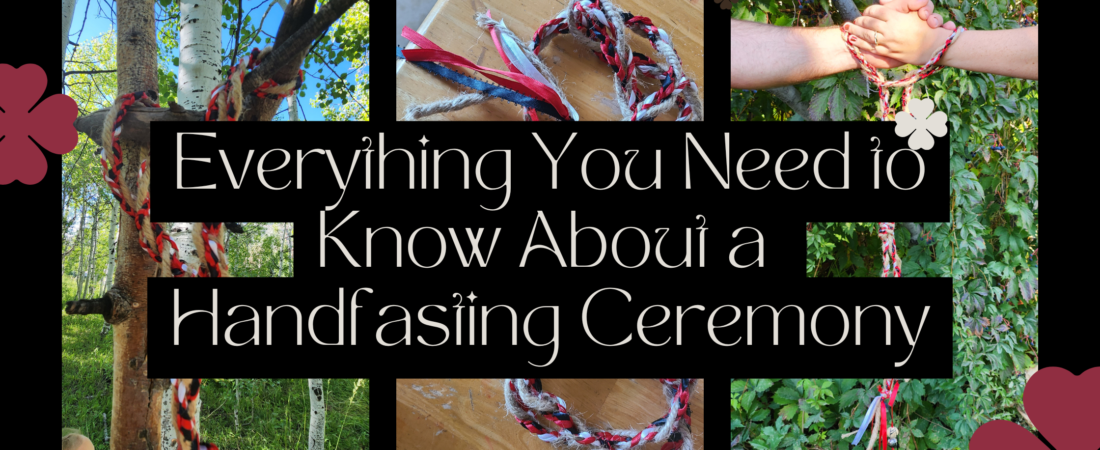
One our 15th wedding anniversary, my husband and I held a handfasting ceremony to celebrate how far we had come together and to renew our promises for the future. Though it was a quiet, simple ceremony, it was meaningful.
Unlike our Mormon wedding, my parents and brother were able to be there. In fact, my dad was the one that officiated. And though it seemed like a normal day to everyone else, it was a very special moment for us. Leaving my parents outside the temple when I was married was one of the most difficult choices of my adult life. And having them at the handfasting healed some of that hurt, at least for me.
Our kids, who weren’t born yet for the first wedding, were also a part of the handfasting. They helped us plan, make supplies, choose a spot, and set up. The youngest was a flower girl, while the other two were sword-bearers (like ring bearers, but cooler).
We made matching Norse costumes, had the girls’ hair braided with beads, bought bouquets, had a cake made, prepared a feast, and chose a spot on a nearby mountain in the forest. Rather than stressing about making everything perfect, we giggled had fun as we slipped on moss, watched our son sword fight invisible enemies instead of standing still, and tried to get through our vows while all this was happening.
Still tied, our handfasting knot is a part of our home decor, a reminder of a day when our family celebrated marriage- both the good and the difficult days- and our commitment to stick together through it all, walking hand-in-hand no matter what.
What is a handfasting ceremony?
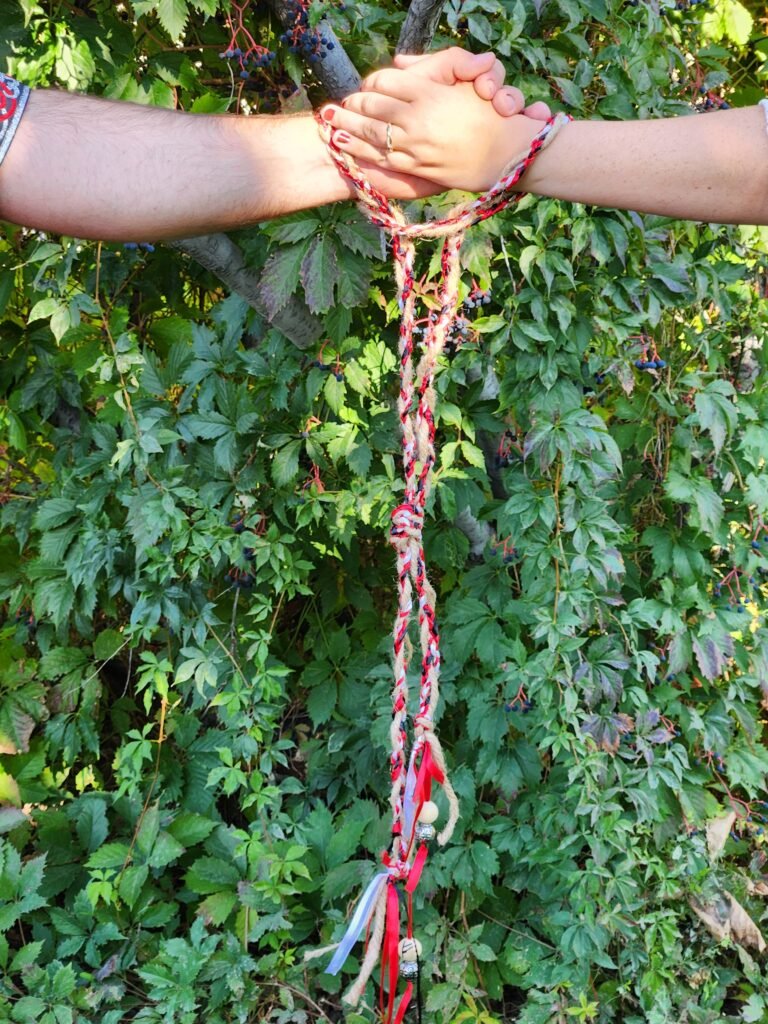
Handfasting is a marriage ceremony in which the bride’s and groom’s hands are bound together with a cord and vows are exchanged. During the ritual, the couple clasp hands in front of an officiant. The officiant wraps the cord around them, usually in three to four movements, eventually creating a knot. This is where the expression “tying the knot” originates.
Handfasting ceremonies can be a part of a legal wedding (depending on state laws), an extra part of a traditional wedding, a vow renewal, or a commitment ceremony. They are easy to customize and often show off the personality of the couple being bound together.
Traditionally, the couple stays bound by the handfasting cord the rest of the night. Removing it, or untying the knot, dooms the marriage as it also unravels the promises and union made. Since our marriage was already pretty solid and we had to drive down a mountain road afterwards, we carefully removed the cord with the knot still intact and took it home.
What does handfasting symbolize?
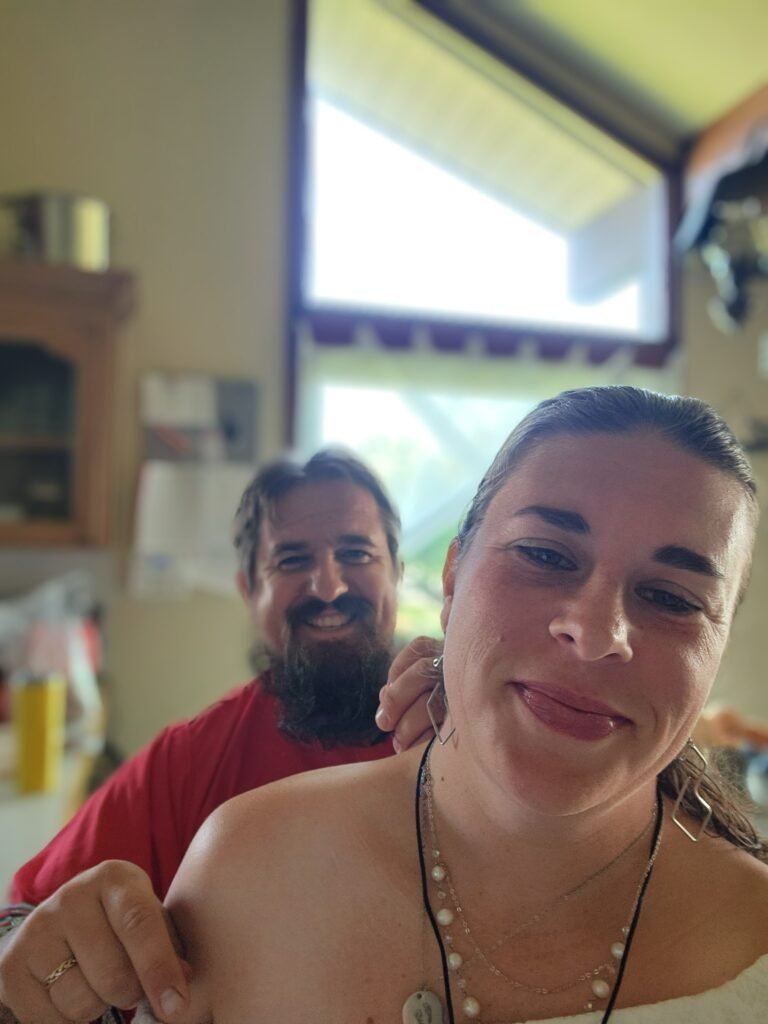
The handfasting cords and knot, along with the joining of hands, symbolize the binding together of two lives. It is a visual reminder of the promise to face life as a couple. The idea is that from now on you stand hand-in-hand and neither of you is alone, no matter what comes. It is a visual representation of the vows traditionally made at a marriage.
During the handfasting ceremony, each of movements in tying the knot can be given specific symbolism. Each movement can represent a promise between the couple, in addition to their vows. As the officiant ties the knot, he or she pauses after each movement, discussing the significance of the promises being made. The binding of the knot seals those promises.
Alternatively, some couples choose to use the movements in tying the knot to represent the past, present, and future. In this way, they honor who they are now, how they got there, and their future together from this moment on.
Others choose specific values to represent each movement, and the knot seals a promise to honor those values with each other. Many couples who go this route choose the values they want to bless their marriage most (e.g. love, loyalty, passion, trust, friendship).
Finally, others use each movement during the knot tying to ask for blessings from the elements (air, earth, wind, fire) or the old gods as knots are tied.
Where did handfasting ceremonies start?

Though people around the world practice handfasting today, historians believe the practice began on the British Isles, particularly among the Celts. The idea of physically binding a couple’s hands together with a cord, is unique to that area.
However, it is thought that modern handfasting ceremonies have been customized with a mixture of the Celtic practice, the Norse tradition of clasping hands during a marriage ceremony, and a few newer practices that have evolved over time. Today, handfasting ceremonies can include any version the couple wants.
What happens at a handfasting ceremony?
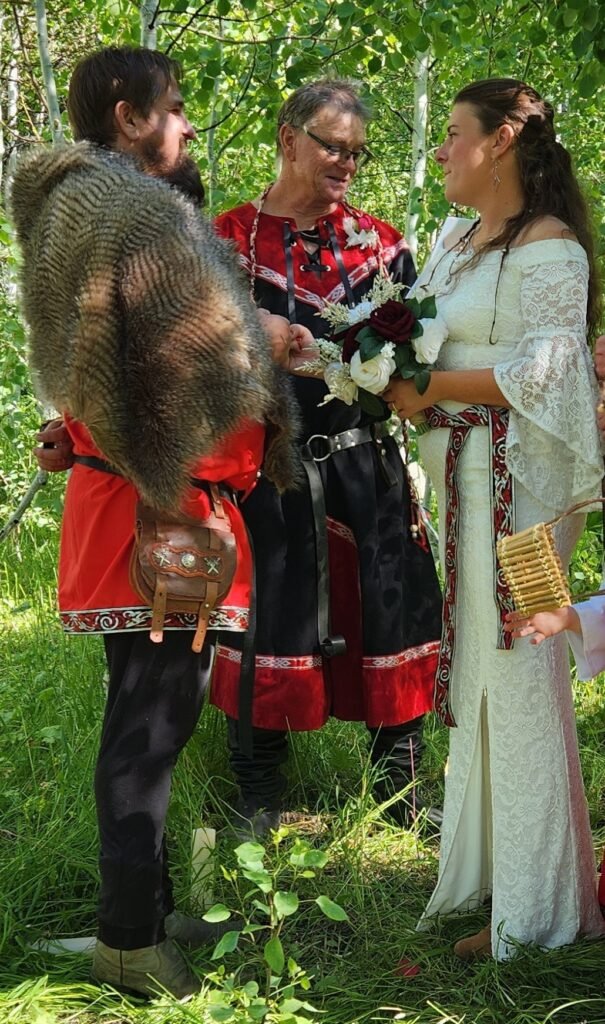
Much like a wedding, most handfasting ceremonies begin with a welcome to guests. Next, the couple exchanges vows, either lead by the officiant or that they have written themselves. The couple then joins hands, linking thumbs. The officiant places the cord on their clasped hands and ties the proper knot. While there are different knots that can be used, this is the one we did because it was simple and easy to follow. If the couple wishes, the officiant can pause after each step and give a short speech about the meaning of each movement of the cord. Finally, the ceremony concludes with a short declaration of the couple’s unity (you may now kiss the bride), an exchange of gifts (we exchanged swords) and/or a kiss between the couple.
However, handfasting ceremonies are popular because they are easy to customize to fit the personality, wishes, and beliefs of the couple being united. Really the only rule is that your hands need to be bound together. Beyond that, it’s up to the couple to decide the program. Handfasting may be a legal wedding ceremony, or you may need to have a traditional wedding and supplement it with a handfasting. As we were doing a vow renewal, we didn’t need to worry about this. If you are planning for your wedding it’s best to check local laws.
How do I make a handfasting cord?
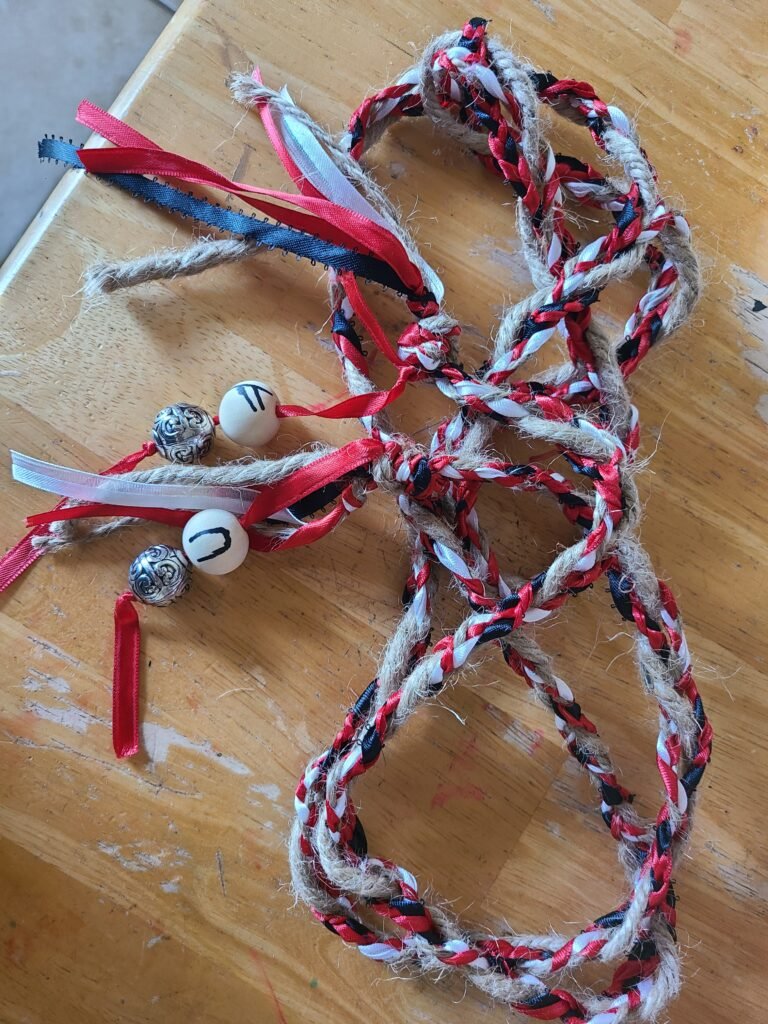
While there are many handfasting cords ready-made and available for purchase online, making our own cord seemed more meaningful to us. Plus, we could get the colors, materials, and trinkets onto it that we really wanted.
Gather Your Materials
Handfasting cords can be made from fabric, ribbon, or yarn and can be adorned with charms, beads, feathers, crystals, or other meaningful trinkets. They can consist of a single string, or may be braided, twisted, or woven together into a final 3-9 foot cord. Braids can be as simple or complex as you want and there are so many videos about making different types of patterns and braids. All that really matters is that the final product is long enough to wrap around the couple’s joined hands at least 4 times. We made ours on the longer side because we knew we wanted to hang it in our home after the ceremony.
Colors are an important part of the cord and often very symbolic. They may represent colors from each family, values or goals that the couple deems important, or simply the wedding color scheme. While individual colors can represent anything the couple decides, there are some that are commonly recognized. Red for passion, white for purity, gold for prosperity, blue for loyalty, or green for growth.
Braid Your Cord
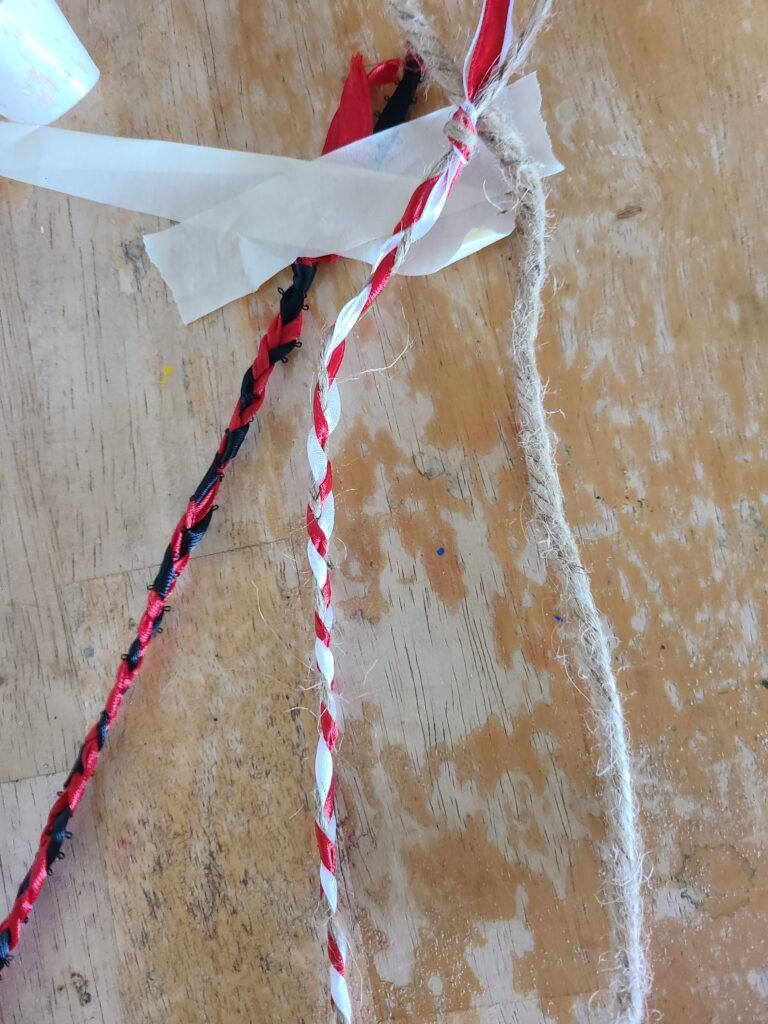
After choosing your materials, it’s time to get to work. In our case three red ribbons, a black ribbon, a white ribbon, and jute string. We chose these colors because they were the colors of our original wedding (and most of our home decor). To us, they represent passion and love, strength, purity, and simplicity. We started by matching the strings so the ends were even. Then, we cut about 9 feet lengths of each string, stacking them on top of each other. We braided two reds and the black ribbon together and a white, red, and jute together in two separate braids. Next, we put the two braids together with the larger jute string and tied a knot about 5 inches from one end that held all of them strings together. Then, we taped that end to the table and braided a three-strand braid until we reached about 5 inches from the opposite end. Here, we tied another knot to keep the braid in. Finally, we added personalized “Norse” beads (from Amazon, of course, just like the real Vikings), by stringing them onto individual ribbon ends and tying knots below each bead. The wooden beads we used, were personalized with runes that (to us) represent the letters F and U (yes, I see it). Those letters are initials for his last name and my maiden name, a symbol of honoring where we came from and of two families being bound together.
How do I preserve the knot?
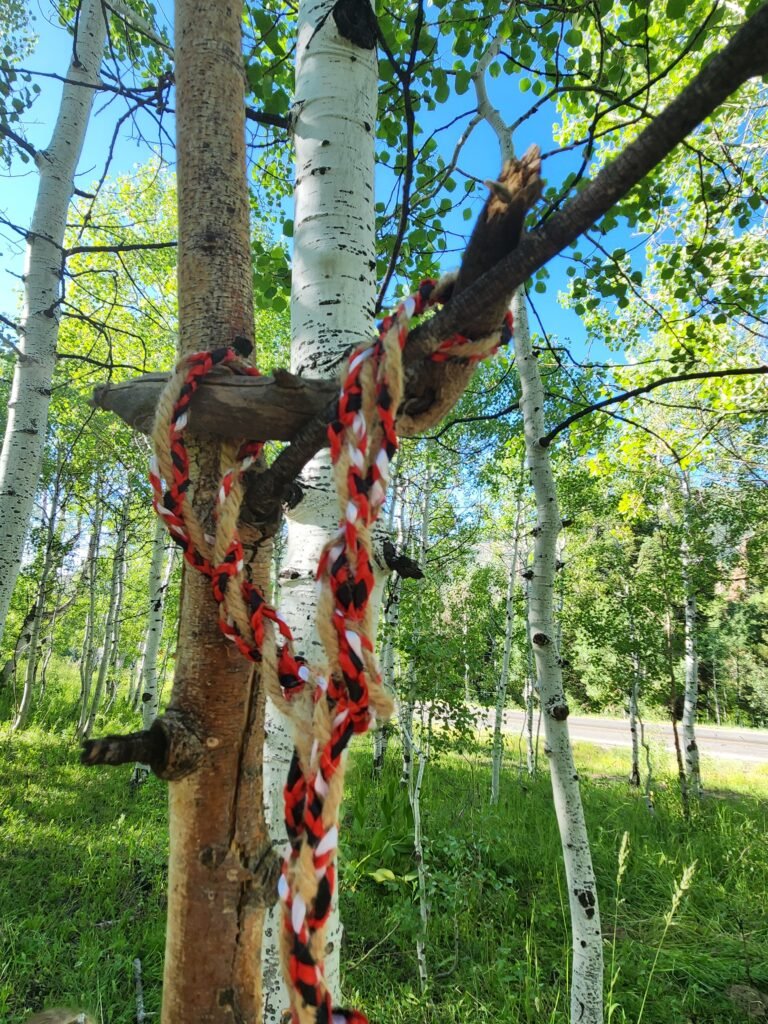
While it is traditionally bad luck to take off the knot on the same day as the handfasting, many people opt to preserve their knot as a keepsake for years to come. For us, this meant carefully slipping the knot from our hands and, eventually, hanging it on a piece of driftwood on our wall at home still intact.
Many couples choose to encase their intact knot in a shadowbox with other keepsakes from the day. Others build a custom display stand or hook, place it in a memory chest, or pass it down as an heirloom.
Depending on the materials, the knot may need to be kept out of direct sunlight, away from heat, and protected from dust. However, the simplicity of ours means that it hangs in our family room and gets blown off by canned air occasionally to remove dust.
How do you celebrate afterwards?
What’s a wedding without a party?
The handfasting ceremony is often followed by other traditional wedding activities. It may be a part of the wedding ceremony, or completely erase it. However, many couples still include a cake and the ritual of cutting the cake together and feeding each other. There may be music, dancing, food, and drinks. Couples can still do the first dance, father-daughter dance, and son-mother dance as well as have professional pictures taken.
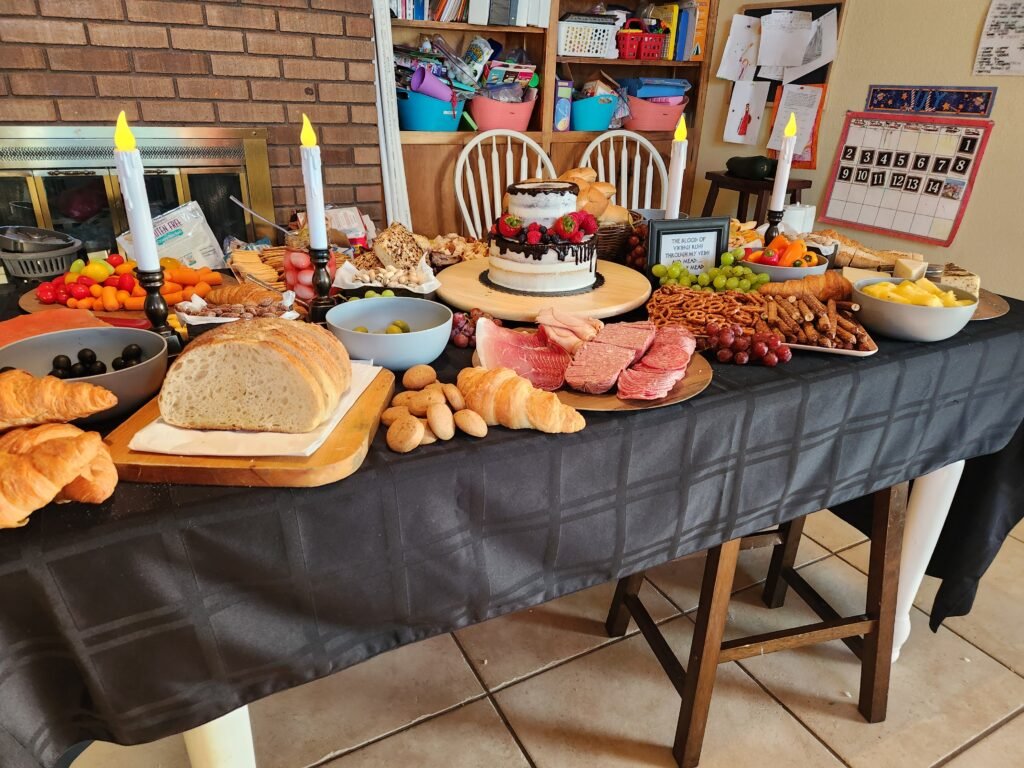
In our case, the party was small. After the knot was tied, my husband and I, helped by our sword bearers, exchanged swords (a Viking tradition). We cleaned up the mountainside, went home, and feasted. The house was decorated before we left with simple flowers, leaf garlands, and Viking memes. While it was not historically accurate, we had a Viking feast that included breads, cheeses, meats, and fruits. It was all laid out on a table buffet-style so we could snack the rest of the night. We did have the traditional cake cutting and our kiddos chose a Viking song, choreographed a dance, and performed it. Finally, rather than a bouquet toss, we honored the goddess Freya (goddess of marriage) by “adopting” stuffed kittens. There was a kitten for each guest and I tossed them over my head, just like a bride tosses the bouquet. Whoever caught that kitten was the proud new owner. We also did a photo shoot.
Handfasting ceremonies can be a meaningful, personalized, and symbolic experience for both the couple and their guests. You really can do anything you want, which allows the freedom to express yourselves and your goals for the future.