
Fall is here and, living in a Victorian home has its disadvantages during this season.
Spiders.
So many spiders.
Victorian homes were never built to be airtight.
They were meant to allow in moisture….and then allow it to dry out.
But all those tiny gaps mean that, as it gets colder outside, the spiders want to come inside.
Luckily, most of our spiders are beneficial.
The daddy long legs help deter other spiders and control things like flies, mosquitoes, and gnats with their webs.
The jumping spiders do the same by hunting. Most of ours gladly live in windowsills and hunt in peace as long as they don’t come to close.
But, nobody wants to pull out a jacket out of the closet and realize that there’s a new friend guarding it- when you put your arm into it.
Or grab a blanket from the linen closet, snuggle up, and feel that crawling across your neck.
So, we gently encourage the spiders to go elsewhere with a really simple, fun craft that anyone can do. These can work for ants, mice, roaches, and flies too.
And while the Victorian-ness of our home amplifies the problem, no home is without nooks and crannies that allow pests inside in search of warmth and food. Especially during the fall, when many of them breed, lay eggs, and hunker down for winter.
Even if you are pest-free (congratulations!), these fun spice bags smell so good, you might want to make one…or a dozen…anyways.
In fact, it’s only three steps, three ingredients, and a perfect fall activity for the whole family.
Step 1: Get the Things
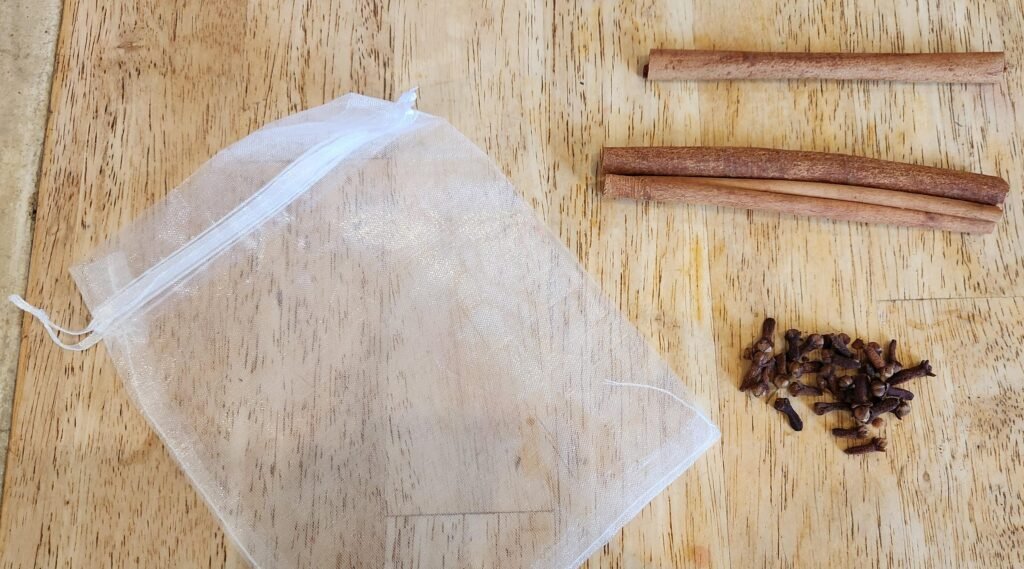
Our spice bags consist of a small organza bag (Dollar Tree and Amazon have them for about 7 cents each), a few cinnamon sticks, and about 1 Tbsp. of cloves.
You can add to that if you want: anise, pepper corns, bay leaves, mint, dried orange peels, dried lemon peels, lavender, or sage are all common options.
If you are giving them as gifts, the extra items may make a scent combination that fits the holiday or season. Lavender is great for summer, as it helps repel mosquitoes. Mint, especially peppermint, has a very Christmas smell. And adding dried citrus not only helps repel pests, but makes your bags look fuller and more colorful. Just be sure to avoid high-sugar items (e.g. cranberry) that may attract pests rather than repel them, and anything that is going to rot or mold if left alone for a few months.
If you are making them for a specific problem, certain scents may repel better than others.
For example, mice hate mint, ants and spiders hate cinnamon, most things hate black pepper and bay leaves, citrus can help with roaches and flies, and almost all the bugs stay away from sage.
But, in our house, we keep it simple and use just the bag, cinnamon, and cloves.
This produces pockets of scent that aren’t distinctly fall or Christmas, but are useful from equinox to equinox.
The organza bags allow the scent to pass through while keeping the ingredients together, which makes them easy to swap out when you want a new scent, or they wear out.
Step 2: Put the Things in the Bag
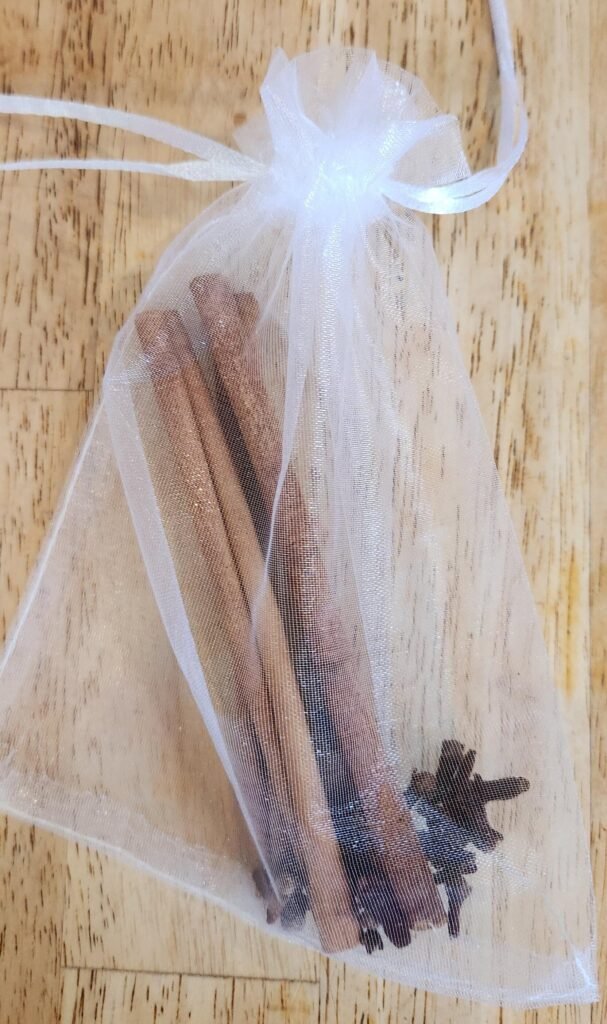
Easy, peasy.
Just place the spices (and any of your custom ingredients) inside the bags and pull the strings at the top to close it up.
Step 3: Place the Things Where You Want Them
After your bags are assembled and closed up, simply place or hang them in the areas you want them.
They are small enough to hide, but pretty enough to use as decoration if you want to leave them out.
Because our goal is pest control in small areas, we mostly just throw them into corners of cabinets or hang them on an extra hanger in each closet.
However, these could be placed under furniture, near windows, on mantles, or even on a shelf.