
With the 250th anniversary of Independence Day coming up, a lot of us are not feeling the same patriotism and joy that we used to on the 4th of July. Many of us are wondering where it all went wrong and how we bring it back to the ideals our founding fathers (and mothers) fought so hard for.
One of the ways I believe we can truly bring America back is to learn about our founders and teach our kids the principles that made our nation great and why they were so important to the men and women who protected them.
History in classrooms has become nothing more than memorizing names and dates and boring battle strategies. It’s something you learn out of order, don’t connect to at a personal level, and dump as soon as the class is over.
As a homeschool mom I’ve learned that kids remember lessons best when they are real, relatable, and sometimes a little bit silly. My poor kiddos know more stories from history than most of us ever learned, but they talk about them all the time because those stories are what make a historical figure into a character that they love. Those stories are the ones that explain the why behind the hero. They are the ones that help my children understand that America was forged in war by our ancestors so that they could enjoy the freedom that was won, even now, 250 years later.
So this year, I’m sharing 10 Fourth of July History Facts that my kids love talking about:
1. The Declaration of Independence wasn’t signed on the 4th of July
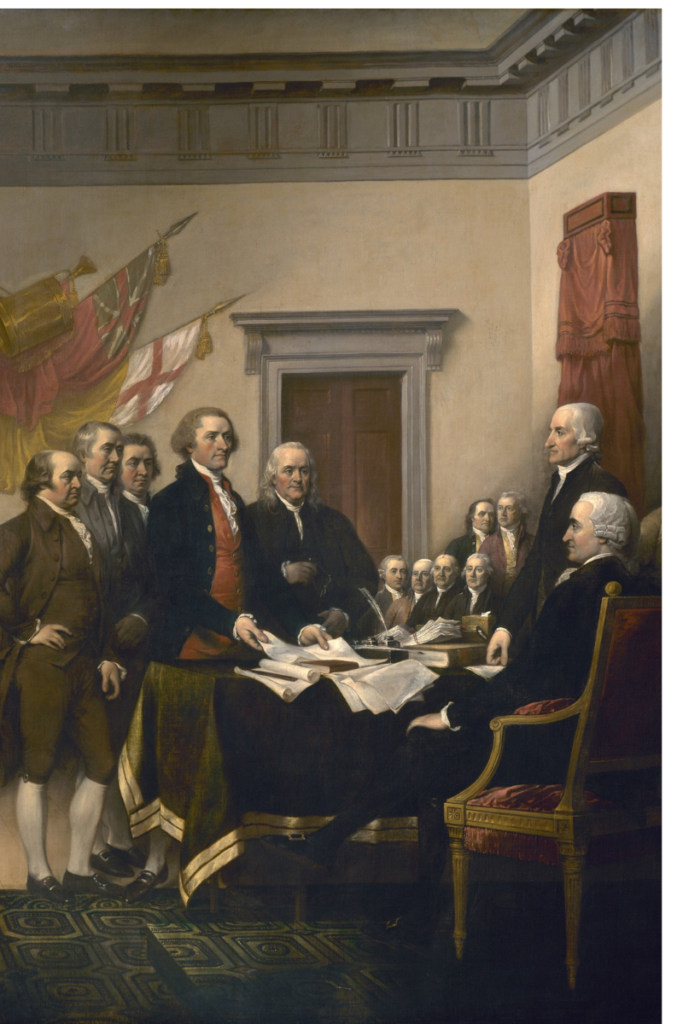
Actually, it was likely not signed completely until after August 2nd, 1776. On this day, most of the signatures were added, but some of the founders were not able to meet that day and signed later. Most of the men who signed the Declaration had to find creative ways to meet, even sometimes gathering in the middle of fields. The very act of signing the document was an act of treason, punishable by death. This meant that the Declaration had to travel from place to place, adding signatures along the way.
So why do we celebrate the 4th of July as our official Independence Day? The Declaration was voted on in Congress on July 2nd, after many revisions and debates. The wording was officially approved on the 4th, making July 4th the day we now celebrate as the start of American independence from Britian.
If you’re interested in learning more, you can find the entire timeline here.
2. Ben Franklin had some….creative ideas
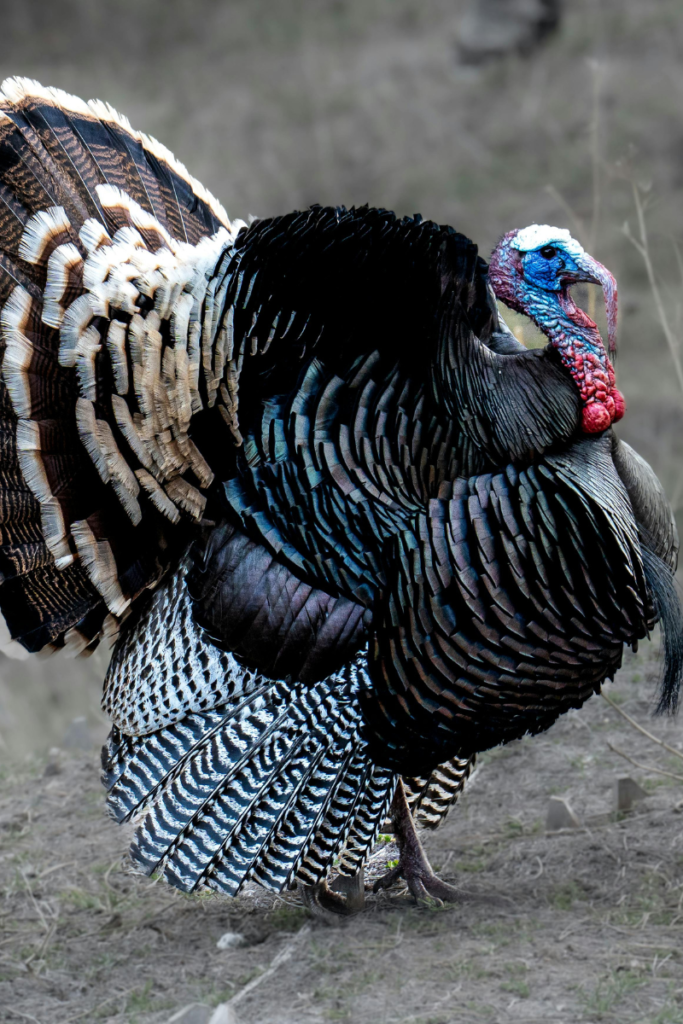
Ben Franklin wanted the wild turkey to be the national bird, rather than the bald eagle. He said that the turkey was a more noble option, as eagles were scavengers and thieves. It was also native to America and a unique part of the colonial diet. Turkeys eventually became the cultural main dish of Thanksgiving (also unique to America), instead.
Ben Franklin also loved to invent, experiment, and write satire, even as a teen. He was always doing something, though some of his activities were questionable to other founders. During his time in France, he became a celebrity and many people there copied his stlye of dress. He is also the only non-president on US money.
3. Washington was a faithful Christian

While it’s well-known that many of the founders were Christian (the Bible is the most quoted book in our founding documents) Washington was especially faithful. During the Revolution, he required his soldiers to attend church each Sunday, refrain from drinking, and watch their language. He treated them like sons and expected them to conduct themselves with a dignity that he felt the British soldiers lacked. When he was sworn in as president, he placed his hand on the Bible, a sign that he was making a promise not only to the people of America, but to God.
During the war, Washington was often found in secluded areas near his troops, praying for divine help. He designed and flew a flag that depicted these appeals to heaven and flew it on his personal ships. Though many of his soldiers were not as devout as him, many watched as Washington’s prayers were answered on more than one occasion.
Miracle 1: Over winter, when his troops were stationed at Valley Forge, food and supplies were running low. As the majority of colonials did not support the war, it was difficult for American troops to find help. As the men faced starvation, Washington pled in prayer for food to support his soldiers. Soon after, spawning fish moved up the river next to them, allowing the men to catch as many fish as they could eat.
Miracle 2: After he was pinned down during the Battle of Long Island, Washington planned to evacuate his troops across the river after night fall. Nine thousand soldiers had to be moved from an island to the mainland, all without the British seeing them. The British knew the men were trapped and simply watched and waited for surrender. In Washington’s camp, fires were kept burning to trick the British into believing that the men were staying put. However, while a few tended fires, boats were quietly being loaded with soldiers and supplies. Washington reportedly stayed until the last boat, praying that his plan would work. Under the cover of night, many of the boats traveled across unseen. When the sun rose, however, not all of the boats had crossed into safety. Just as their plan seemed doomed, a deep fog descended on the area, hiding the boats until all the men, and then Washington, were safely out of reach.
Miracle 3: In another apparent example of divine intervention, the famous crossing of the Delaware nearly didn’t happen. On Christmas night, after a storm of ice, snow, and sleet, the boats were delayed in their crossing. The river kept freezing over, making it nearly impossible to cross. After several delays, however, they finally made it across, facing miles of open land before arriving at the fort. As this was to be a surprise attack, being discovered would’ve meant complete failure. The storm continued, with snow and wind covering their advance and hiding the footprints and noise of hundreds of soldiers. The attack culminated in a sunrise battle with the storm at Washington’s back, allowing a victory for America with minimal casualties. This battle is what turned the tide of the war in the favor of Americans.
4. John Hancock was very wealthy before the war

While he is now best known for his large signature on the Declaration of Independence, John Hancock was very wealthy before the war began. He owned his own business, a fleet of merchant ships, and a large home. However, this wealth made him a target of the British during the war. His resources were useful to the American army. Hancock, like many other founders, lost much of what he had built in the colonies during the war. Each signer of the Declaration of Independence knew they were risking their homes, futures, and lives and many gave up at least one of those things to win freedom.
5. The original draft of the Declaration of Independence blamed England for slavery

Thomas Jefferson, though he owned slaves, sought to end slavery in America from its founding. The original draft of the Declaration blamed England for the practice of slavery in America, pointing out that it was England that established the triangle trade routes and benefited most from them, including slavery. Jefferson accused King George of inflicting a war against human nature and violating the rights of life and liberty by establishing the slave trade in the colonies. This statement would’ve effectively ended the slave trade when America won independence. However, after many objections it was eventually removed to win an approving vote.
You can read the final draft here.
6. Thomas Jefferson loved mac n’ cheese

And pasta in general. Pasta was relatively unknown in America and Jefferson discovered it in his travels in Europe. It became somewhat of an obsession. When he returned to the states, he constantly had pasta imported to his home, worked on a design for his own pasta machine, and actively promoted pasta dishes to anyone he came in contact with. In fact, it got so bad that there was a rule banning pasta during Congressional meetings because of Jefferson.
7. Benjamin Rush was one of the first to treat mental illness as a medical condition

During the time, many people saw mental illnesses as a punishment for sin or a moral failing. However, physician and founder Benjamin Rush proposed that mental illness was medical condition, something wrong in the brain and nervous system. Though he was ridiculed for the idea, Rush fought to treat patients rather than condemn them. During a time of insane asylums, Rush encouraged structured support, routine, reduced sensory stimulation, and dignity for patients. Rather than treating them like criminals or sinners, Rush sought to find ways to heal the mind. Though his treatments were extreme, the ideas behind them were revolutionary for the time and have helped shaped treatment today.
8. The Hamilton-Jefferson feud was real

If you’ve seen the musical, you know that Alexandar Hamilton and Thomas Jefferson did not get along. In the midst of building the nation after the war, the two were always fighting. They hated each other because they were two sides of American ideals which eventually split into opposing political parties. On the one hand, Hamilton wanted a strong central government, while Jefferson thought states should have more rights. This led to ongoing differences in politics and a very public conflict during a time in our history when unity was needed to survive.
It got so bad between them that Washington took them on a fishing trip, hoping to smooth things over. He hoped to end the public bickering and move forward with compromise and unity, something the nation desperately needed if it was going to survive. Unfortunately, Washington’s plan didn’t work and the two continued to oppose each other and argue publicly until Hmailton’s death.
9. John Adams and Thomas Jefferson were BFF’s…..sometimes

During the war, John Adams and Thomas Jefferson lived together for a time overseas, working to gain allies. After Jefferson’s wife died, he stayed with John and his wife Abigail. The family supported him after the loss and provided comfort and routine. During this time, the men became close friends and worked together well. Jefferson became an extended part of the Adams family as they shared a home, meals, and work.
After the war, opposing political views and some personal issues tore them apart. During this time, the men became bitter rivals and stopped all communication. However, towards the ends of their lives, Benjamin Rush visited both men regularly and learned that they were both saddened by the loss of such a close friendship. Rush encouraged them to write letters to one another, patching up hurt feelings and resolving conflicts. Adams and Jefferson died friends once again, interestingly on the same day: July 4, 1826.
10. John Adams, and most founders, didn’t fight the war for themselves

Most of the founders believed that they would lose everything in the war and understood that there was a very real chance they would die before seeing freedom. The Revolution was a rabble army against the most powerful military power in the world. There was little hope that America would become a reality, but the men stood anyways.
What makes a bunch of young adults stand against an entire army and never falter?
Their children. And grandchildren. And…..us.
John Adams famously stated:
“I must study politics and war that my sons may have liberty to study mathematics and philosophy… my sons ought to study mathematics and philosophy, geography, natural history, naval architecture, navigation, commerce, and agriculture, in order to give their children a right to study painting, poetry, music, architecture, statuary, tapestry, and porcelain.”
John Adams, and many founders, fought for a future they believed they may never see because they wanted the world to be better for their children and grandchildren. They wanted freedom for their decedents, including freedom from war. Even during the war, Adams e encouraged his children to work hard on their education, fight for the ideals that he believed would make the world a better place, and stand up for what was moral even against the odds. By doing this, they believed that each generation would improve a little more, rooted in love for those who would come after them. Along with Abigail, John built a future for their children in the midst of one of the most difficult times in American history….all because of love.
*Click here for my blog on Abigail Adams, one of my favorite Revolutionary heroes.